
Flappy Dunk
VOODOOArcade
4.526.66K Reviews
- Version
- 2.17.0
- Installs
- 10.00M
- Age Rating
- Everyone
Screenshots
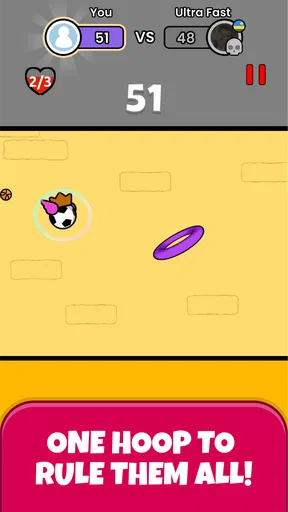
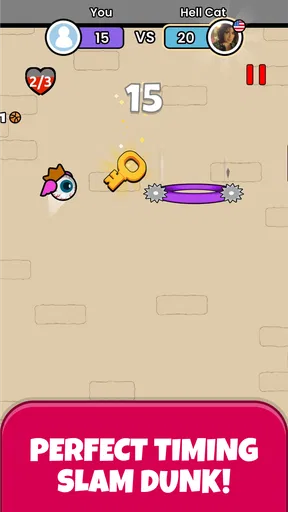
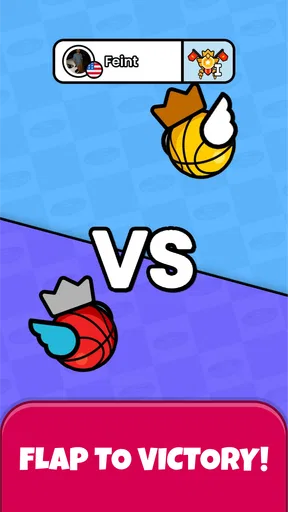
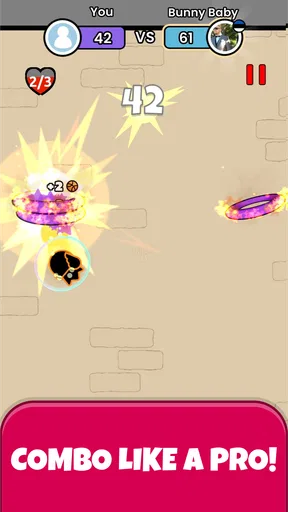
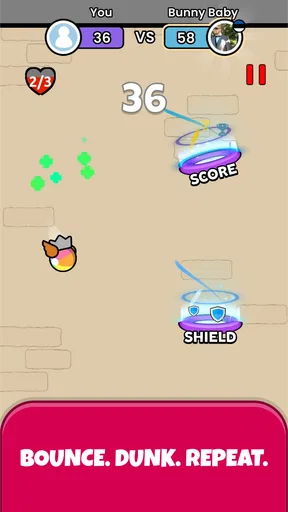
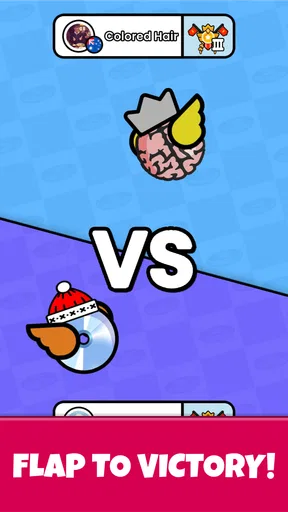
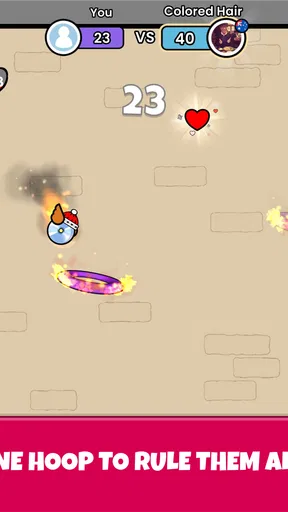
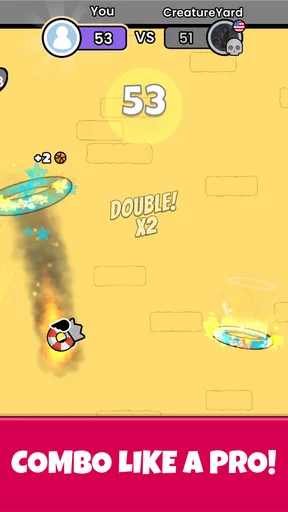
Our Review of Flappy Dunk
 Analysis by Appyee
I expected Flappy Dunk to be a quick distraction and little more, but after spending time with it, I found a surprisingly demanding arcade game hiding behind its simple presentation. The idea is easy to understand: guide a basketball through hoops with one-touch controls while keeping the run alive. The difficulty comes from turning that single input into accurate timing, controlled movement, and a willingness to restart after a small mistake.
That simplicity is the main reason I can recommend it. I do not need to learn a complicated ruleset, build a team, or wait through a long tutorial before playing. I can open it for a brief break, make a few attempts, and put it away. At the same time, it has enough precision to reward repeated practice rather than feeling completely random. My overall view is that it works best as a compact reflex challenge, not as a full basketball simulation or a game I would play continuously for hours.
A basketball game built around timing rather than tactics
VOODOO presents this as an arcade game, and that description fits better than calling it a traditional sports title. The basketball theme gives the action its personality, but the real test is controlling the ball's movement through a sequence of hoops. There is no need to manage a roster, choose plays, or understand a detailed basketball rulebook. The focus stays on the next touch and the next opening.
The one-touch design is immediately approachable. I can concentrate on when to tap instead of dividing my attention between several buttons. That does not make the game effortless. A tap that feels slightly early or late can change the entire trajectory, so the control scheme creates a clear gap between understanding the game and mastering it.
What I particularly like is how quickly the game exposes careless habits. If I tap simply because the ball is near a hoop, I often lose control of the rhythm. Better results come from watching the ball's position, judging the available space, and making each input with a purpose. That makes the experience feel more skill-based than the short store summary might suggest.
The game is free to download and is suitable for Everyone, which makes it easy to suggest for casual players who want something accessible. It is also available for devices running Android 8.0 or later. On the Android side, the current version is 2.16. Those details matter if you are using an older phone or deciding whether this is appropriate for a younger player, although the repeated challenge may still be more appealing to people who enjoy quick tests of coordination.
Why the short attempts become difficult to put down
The strongest part of my experience is the restart loop. A failed attempt does not require a long recovery period. I can immediately think about what went wrong, try a slightly different timing pattern, and see whether the adjustment works. That removes much of the friction found in larger sports games, where a mistake can mean replaying a long sequence or navigating several menus before trying again.
There is also a useful distinction between surviving and playing cleanly. Simply getting through a section is one goal, but doing it with consistent control feels more satisfying. When I stop reacting to every hoop and begin anticipating the next movement, the game becomes less frantic. That shift is one of the less obvious pleasures here: improvement comes from developing a rhythm, not just from tapping faster.
For an everyday example, I can see myself using it while waiting for a train, sitting through a short appointment delay, or taking a few minutes between tasks. One attempt is easy to fit into a small gap. If I have more time, I can continue trying to beat my previous performance. It does not demand the commitment of a match-based basketball game, and I do not need to remember a complicated story or objective after putting it down.
Another practical strength is the clarity of its central challenge. When I fail, I usually understand that my timing or attention was the problem. That is valuable in a casual game because it gives each retry a purpose. I am not merely hoping for a better result; I am testing a correction. In my experience, that makes the repetition feel more fair, even when the game becomes frustrating.
Small habits that make a real difference
My first useful adjustment was to stop staring only at the basketball. Watching the next hoop and the space around it gives me more time to prepare. The ball remains important, but looking ahead helps prevent the rushed taps that happen when I react at the last possible moment.
I also found it better to play in short focused sessions than to continue after my attention has slipped. Because the controls are so simple, tiredness can be deceptive: I may feel that I am still playing normally while my timing gradually becomes less precise. A brief pause often helps more than forcing another dozen attempts.
A third tip is to treat early attempts as observation rather than serious scoring runs. I try to notice the pace of the sequence, the point at which I usually panic, and whether I am tapping from habit instead of responding to the situation. This turns a frustrating restart into a quick practice exercise. It is a small change, but it makes the game more rewarding for players who normally give up when a simple title becomes unexpectedly demanding.
I would also recommend keeping the phone steady. One-touch games can encourage casual play with one hand while walking or multitasking, but that is exactly when mistakes become difficult to judge. A stable grip and an unobstructed view make the controls feel more predictable. The game is simple enough to play casually, but accurate attempts benefit from treating it like a short concentration exercise.
Where the experience starts to lose its appeal
The same repetition that makes the game accessible can eventually become its biggest limitation. If you want varied basketball situations, tactical decisions, opponents, or a sense of progression beyond improving your own execution, this may feel thin. The game focuses tightly on one mechanic, and that focus is both its identity and its boundary.
I also would not describe it as relaxing in the usual sense. The presentation may be light, but the repeated need for precise timing can become tense. After several failed attempts in the same session, I sometimes found myself tapping more quickly and making worse decisions. Players looking for a calm game to play without concentration may prefer a puzzle title with slower pacing.
The free model is another point worth considering. The game costs nothing to start, but in-app purchases range from $0.99 to $109.99 per item. That does not automatically make the experience unsuitable, yet it means I would approach optional spending carefully, especially on a device used by a child. I would play the core experience first and decide whether anything additional genuinely improves it rather than treating purchases as part of the basic requirement.
There is also a difference between a game that is easy to learn and one that is easy to master. Flappy Dunk belongs firmly in the second category. Someone may understand the control within seconds and still struggle to produce consistent results. That can be satisfying for patient players, but it may feel unfair to anyone expecting the word “simple” to mean immediately successful.
How it compares with other casual arcade choices
Compared with a conventional basketball game, this is much faster to enter and much narrower in scope. A sports simulation is the better choice if you want teams, matches, strategy, or the feeling of controlling a complete game. Flappy Dunk is better when the basketball theme is mainly a framework for reflex practice and quick retries.
Compared with endless runners, its challenge feels more focused. Runners usually ask me to manage several kinds of movement or avoid hazards while the environment moves continuously. Here, my attention is concentrated on the relationship between the ball, the hoop, and the timing of each touch. That makes it a good alternative when I want a more precise challenge than swiping through a changing path.
It also differs from slower puzzle games. A puzzle may reward planning several moves ahead, while this game rewards immediate visual judgment and repeated physical timing. If you enjoy analyzing a board, this may feel too reactive. If you like improving a small motor skill through repetition, its compact design is likely to be more appealing.
In other words, I would not choose it as my only basketball game. I would choose it alongside larger games when I want something that starts instantly and asks for a different kind of attention. That distinction helps set realistic expectations: this is a focused arcade toy with depth in execution, not a broad sports package.
Who will get the most from it
This is a strong fit for players who enjoy short attempts, visible improvement, and controls that are easy to understand but difficult to perfect. It suits commuters, students taking a quick break, and anyone who likes chasing a better personal performance without investing in a long session. It is also a reasonable first arcade game for someone who does not want a complicated interface.
It may appeal to younger players because of its Everyone age rating and straightforward basketball presentation, but I would still explain that the game can become challenging quickly. The simple control does not guarantee easy progress. For a child, the most important conversation may be about optional purchases rather than learning the controls, since the free download includes in-app purchase options.
I would suggest skipping it if you need a deep career mode, structured competition, realistic basketball rules, or a relaxing experience with little pressure. I would also be cautious if repeated failure quickly ruins your enjoyment. There is no shame in preferring a game that offers more variety or a gentler pace; this one is designed around trying again and refining timing.
The audience size is substantial: it has passed ten million installs, with an average rating of 4.5 from roughly 229 thousand ratings and about 27 thousand written reviews. Those figures do not replace personal taste, but they match my impression that the central loop is easy for many people to understand. The popularity comes from accessibility, while the lasting appeal depends on whether you enjoy practicing the same basic action.
Practical details before you play
Flappy Dunk was released on July 10, 2017, and VOODOO continues to list it at version 2.16. For Android users, the stated minimum is Android 8.0. It is free, so the sensible approach is to install it, play without spending, and decide whether the core loop holds your attention before considering any purchase.
I would start with a quiet few minutes rather than launching it while distracted. The controls are not complicated, but the game benefits from seeing the full play area and responding deliberately. If you are testing it on an older compatible phone, keeping other demanding apps closed may also make the session more comfortable, though the game itself is built around a relatively focused idea rather than a large simulation.
One question many players have is whether they need basketball knowledge. In my experience, no. Familiarity with the sport may make the theme immediately recognizable, but success comes from timing and visual tracking rather than knowing rules or tactics. Another likely question is whether it works for very short sessions; that is one of its clearest strengths, since the restart structure makes brief play practical.
The more important question is whether it stays interesting. My answer is conditional. It stayed engaging when I treated each attempt as a chance to improve a specific mistake. It became less appealing when I expected new systems or major changes in the way I played. That is why I see it as a game to keep available for spare moments, not necessarily one to occupy every evening.
My final recommendation
Flappy Dunk succeeds because it turns one familiar action into a focused test of rhythm and control. I like that it starts quickly, explains itself through play, and gives each retry a clear reason. The best moments come when the taps stop feeling like frantic reactions and become a controlled sequence that I can repeat with confidence.
Its limitations are just as clear. The narrow mechanic may not satisfy players who need variety, and the pressure of repeated precision can be tiring rather than relaxing. The optional purchase range also deserves a cautious approach, particularly on shared or child-used devices. None of those issues undermine the concept, but they do define the kind of player who will enjoy it.
My verdict is favorable with a specific recommendation: try it if you want a free arcade game for short sessions and you enjoy improving through repetition. Skip it if you are searching for a complete basketball simulation, a deep progression system, or a low-effort way to unwind. For the right player, this is a small game with a surprisingly demanding center, and that focused challenge is exactly what makes it worth keeping around.
Privacy and Permissions
See what permissions an app requests and how it handles your data.
- Wi-Fi connection information
- view Wi-Fi connections
- Other
- view network connections, full network access, control vibration, prevent device from sleeping, Google Play license check
Verdict
Strengths of Flappy Dunk
- Simple one-tap controls are easy to learn immediately.
- Short rounds make it ideal for quick breaks.
- Hoops and dunk combos create satisfying score-chasing moments.
- Unlockable balls add variety and a small sense of progression.
- Bright, playful visuals run well on most modern phones.
Limitations of Flappy Dunk
- Gameplay can become repetitive after extended sessions.
- Mistimed taps may feel frustrating during difficult sections.
- Progress relies heavily on repeating similar challenges.
- Ads may interrupt the experience, depending on the version.
- The game offers limited depth for players seeking complex mechanics.
Other Releases by VOODOO
View All


Similar Picks in This Category
View All
Subway Surfers
SYBO Games4.6

Stickman Party 234 MiniGames
PlayMax Game Studio4.6

Subway Princess Runner
Ivy4.4

Temple Run
Imangi Studios4.2

Zombie Tsunami
Mobigame SAS4.6

Stack Ball - Crash Platforms
CASUAL AZUR GAMES4.5
Frequently Asked Questions
What is Flappy Dunk and how do you play it?
Flappy Dunk is a casual arcade game that combines one-tap flying controls with basketball challenges. You guide a basketball through hoops by tapping the screen to keep it airborne. The objective is to score as many successful dunks as possible without crashing. The controls are easy to understand, but the timing becomes increasingly demanding as you progress.
Is Flappy Dunk free to download and play?
Flappy Dunk is generally free to download and play on supported Android and iOS devices. However, the game may include advertisements and optional in-app purchases, depending on the version and platform. You can usually enjoy the main gameplay without paying, although purchases may provide cosmetic items or help reduce advertising interruptions.
Does Flappy Dunk require an internet connection?
Flappy Dunk is primarily designed as a quick, single-player arcade experience, so the basic gameplay can usually be enjoyed without a continuous internet connection. An internet connection may still be needed for downloading the app, displaying certain advertisements, restoring purchases, or accessing online features. Availability can vary by device and app version.
Are there different modes, challenges, or customization options?
Flappy Dunk offers more than a simple endless score chase. As you play, you can encounter different objectives and challenges that encourage you to perform accurate dunks and improve your timing. The game also includes unlockable basketballs, characters, or visual items in some versions, giving players additional goals beyond beating their previous high score.
Is Flappy Dunk suitable for children and casual players?
Flappy Dunk is easy to start because it uses simple tap-based controls and does not require complicated instructions. It can be suitable for children and casual players, but the fast pace and repeated failures may feel frustrating for younger users. Parents should also review the store rating, advertising, and in-app purchase information before allowing children to play.
Play our best games!


